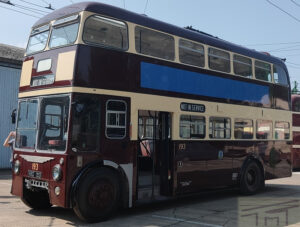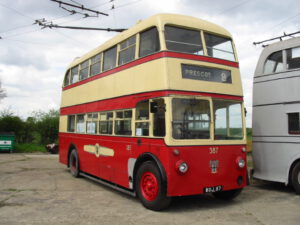
Johannesburg 589
Johannesburg 589
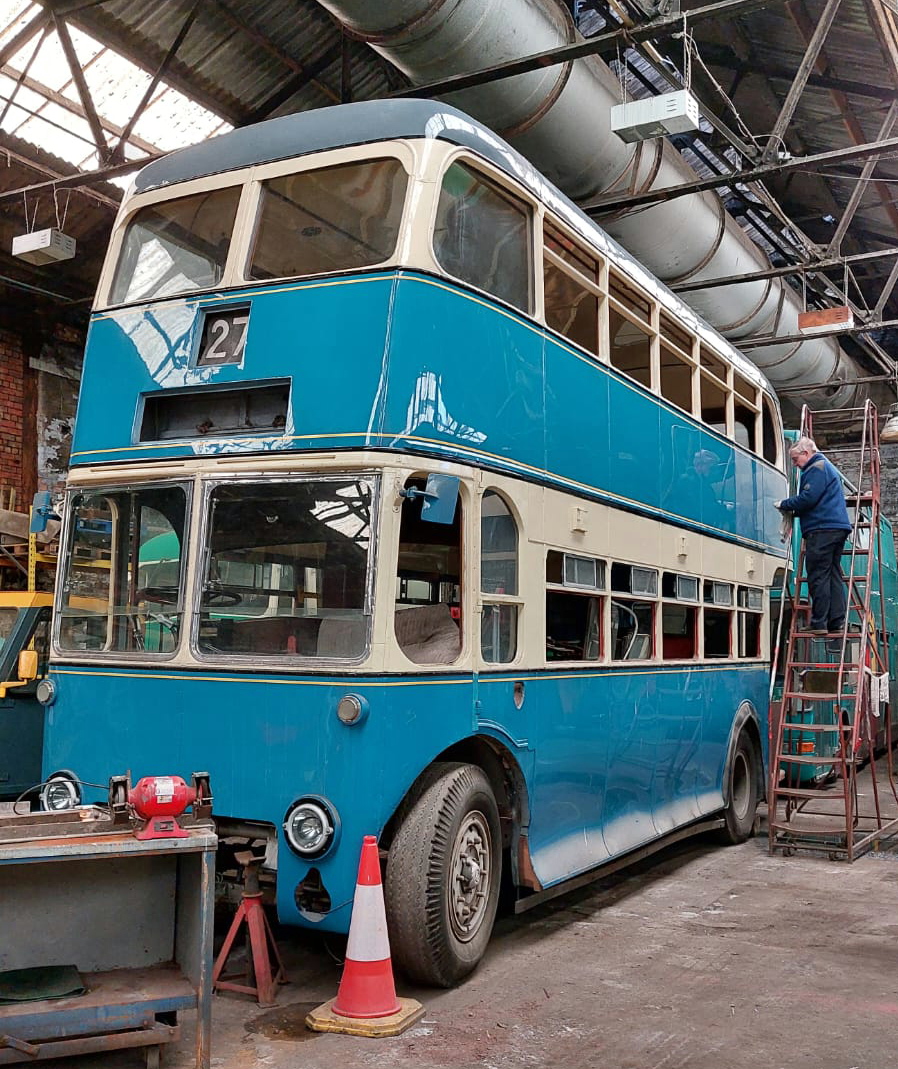
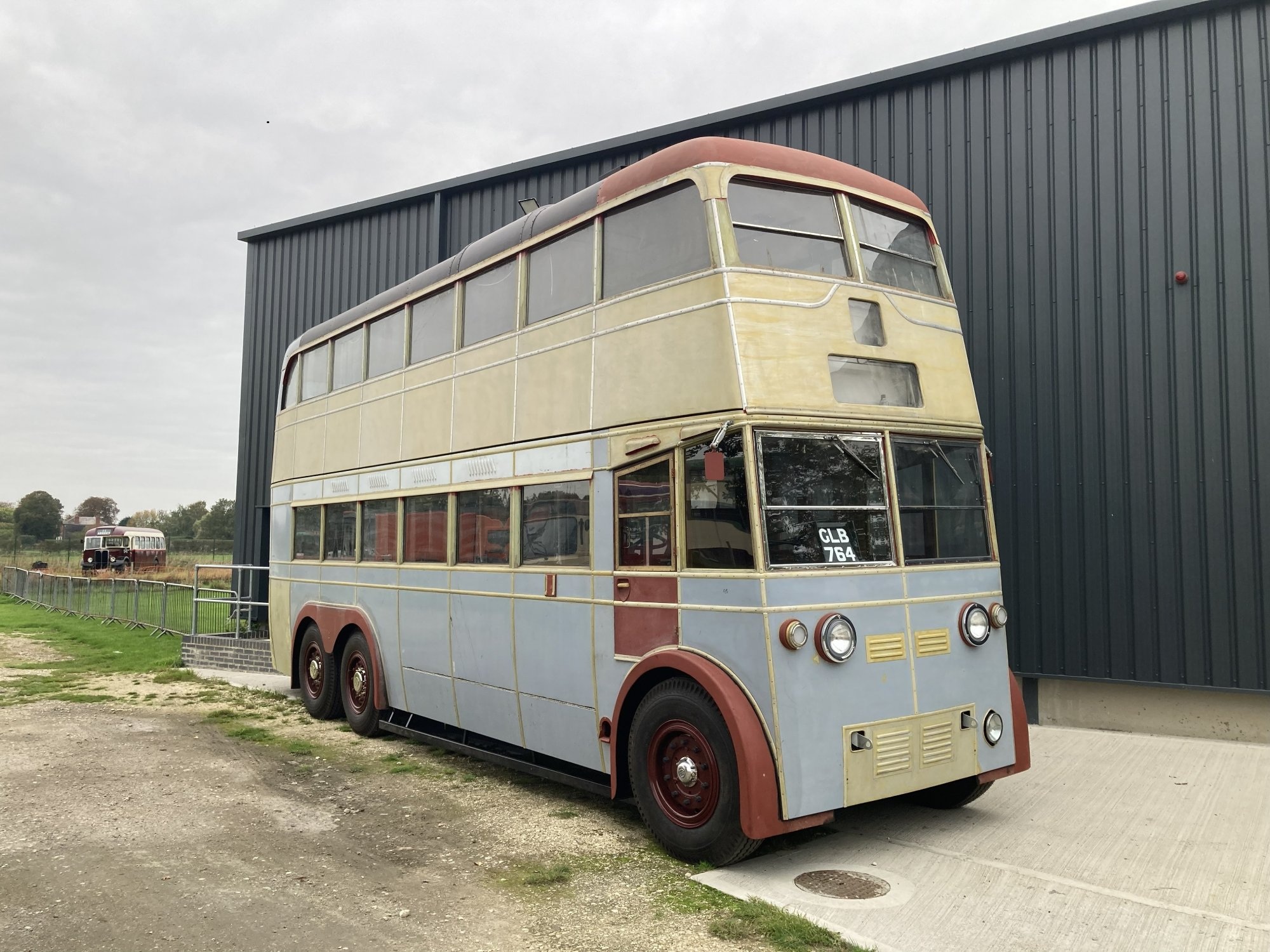
is from Johannesburg, South Africa and is an important new addition to the ranks of trolleybuses preserved in the United Kingdom.

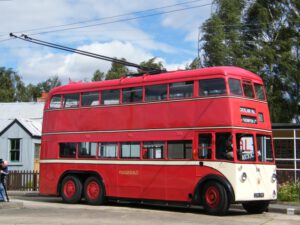
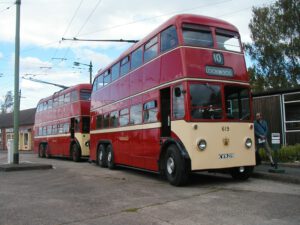
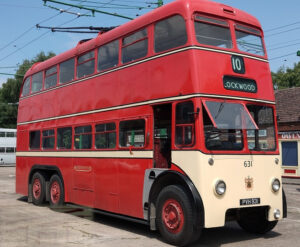
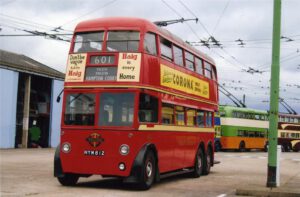
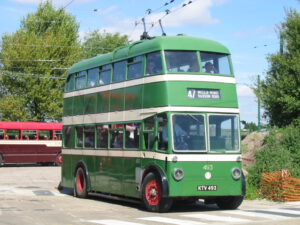
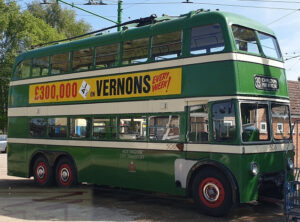
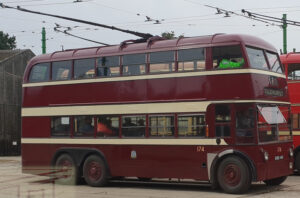
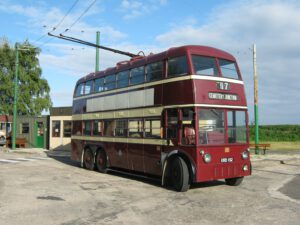
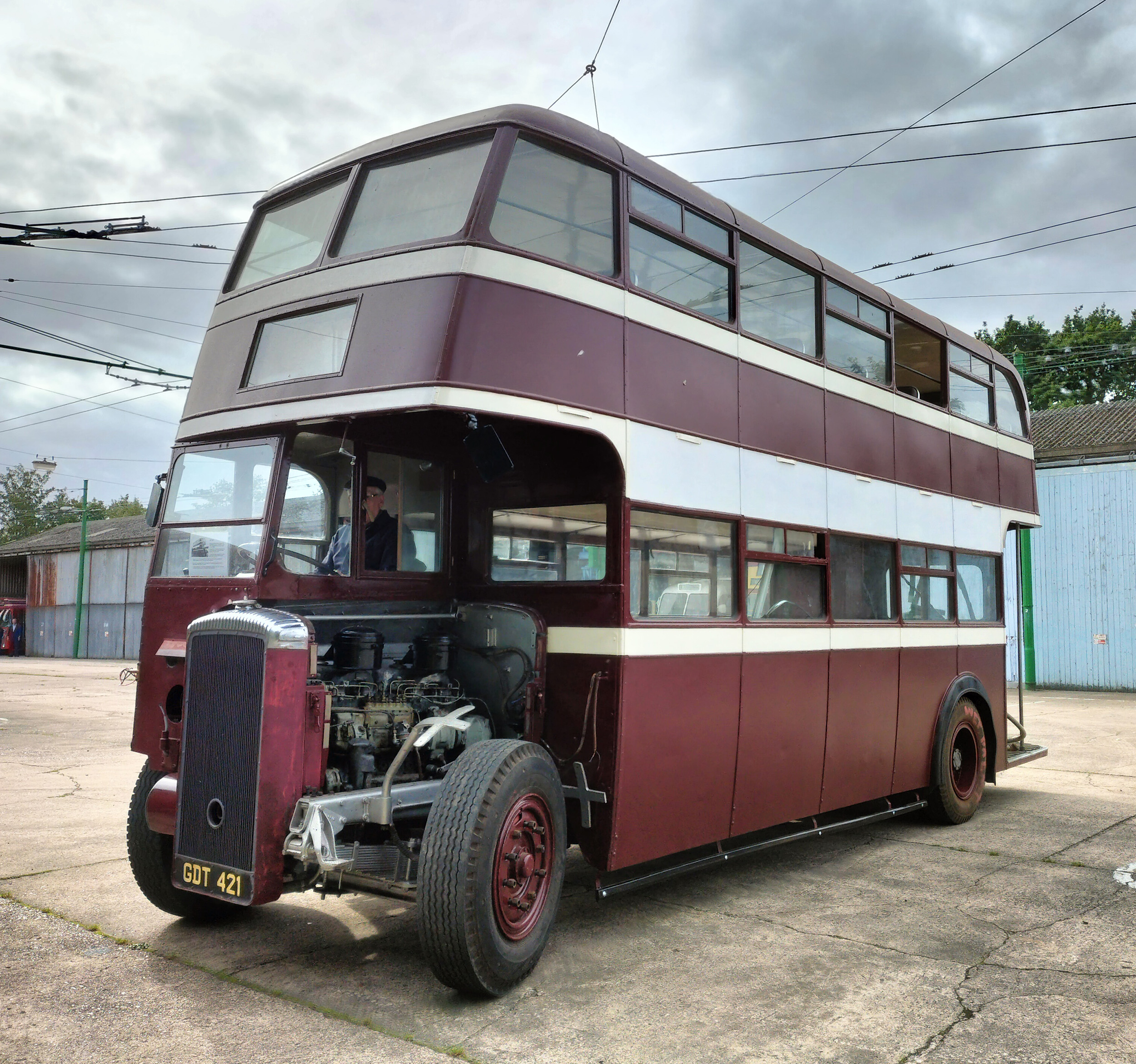
Number. 589 is one of a batch of 45 double-deck BUT 9641T trolleybuses (numbered 564 to 608) fitted with MCCW H40/31D bodies, built in 1948 to meet (and to increase by 15) Johannesburg’s pre-war order for 30 AEC 664T / 8’0” wide MCCW trolleybuses, 18 of which were diverted, because of the war, to become London Transport’s SA3 class (with the balance of 12 never being built).

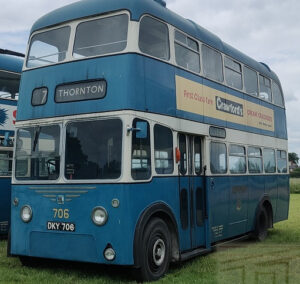
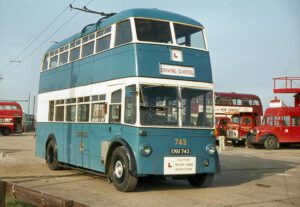
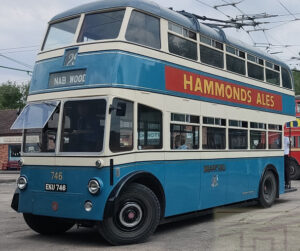
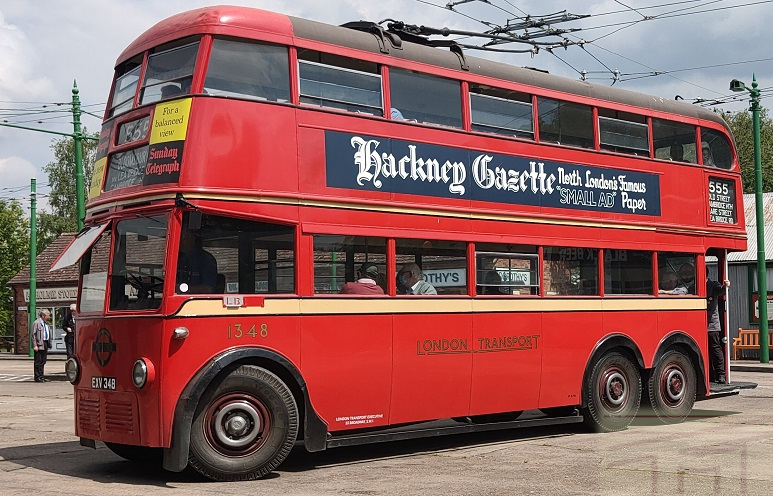
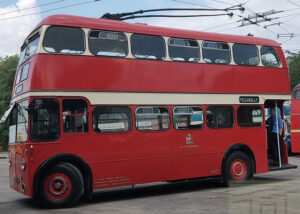
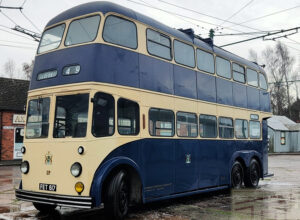
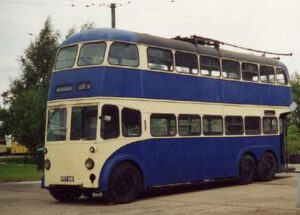
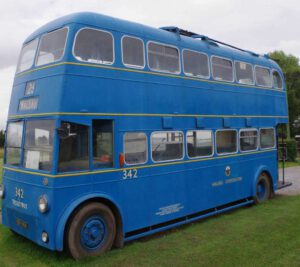
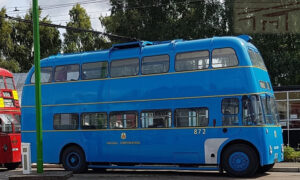
These Johannesburg BUT trolleybuses were virtually identical, mechanically, electrically, in body structure, layout, finishings and appearance (both externally and internally), to the London SA3 class (which were numbered 1747 to 1764), the main differences (apart, of course, from external livery) being the chassis were 8’0” wide rather than the 7’6” of the London vehicles and the London SA class had their front exit doors blanked off.

Virtually unaltered since new, and after some 26 years in service and 4 years in store, no.589 was partially refurbished in Johannesburg Municipal Transport’s works for preservation. The intention (April 1978) was for 589 to become part of the London Trolleybus Preservation Society’s collection, but because of difficulties over moving the trolleybus the 400-odd miles to Durban for shipping to the UK, the project faltered. Subsequently, 589 became an exhibit at Midmar, a national park about 100 miles from Durban, but in 1993, this attraction had its own problems and 589 was donated to the Durban Historical Transport Society (DHTS).

Johannesburg 589 Group

The Johannesburg 589 Group has been set up to be the Project Manager for The Trolleybus Museum at Sandtoft to oversee 589’s acquisition and transfer to the UK, and to then manage the fundraising, restoration, maintenance and general “well being” of the vehicle in preservation. 

The Johannesburg 589 Group consists of enthusiasts from different sectors of the trolleybus preservation movement working together to further the project. 

Click Here for details of how to contact us.

Click here for details of making donations.

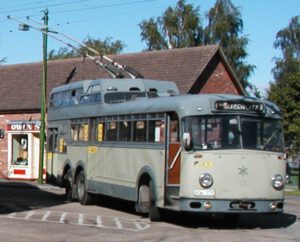
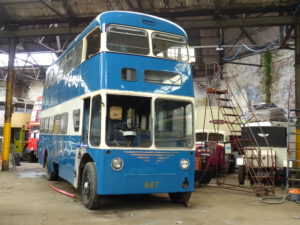
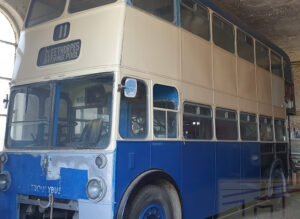
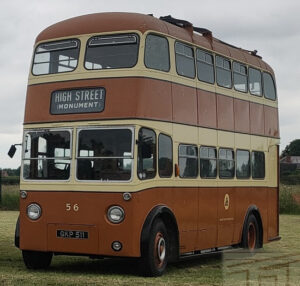
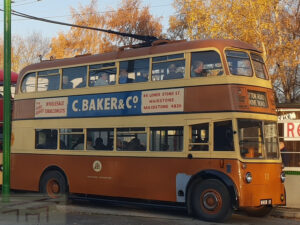
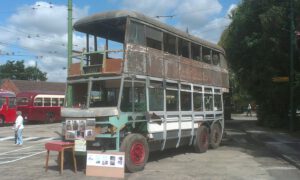
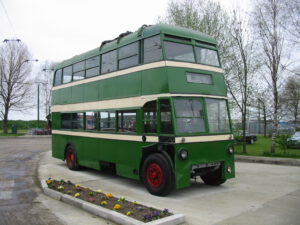
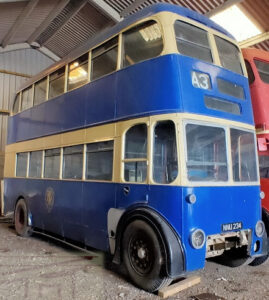
The DHTS re-painted 589 into Durban Corporation grey and cream livery to represent Durban’s very similar fleet of three-axled trolleybuses and exhibited it in their open-air transport museum in the city. The interior remained in Johannesburg condition. Late in 2008, the DHTS were given notice by the City Council that the lease on the transport museum site would not be renewed because of re-development plans, and 589’s future was thrown into uncertainty. Some amazing coincidences in November 2008 brought 589’s plight to the notice of British trolleybus preservationists: after a feasibility study and following negotiations with the DHTS, a small rescue group was formed and arrangements were made for 589 to be acquired for preservation in the UK. Two UK representatives duly flew to Durban in late March 2009 to prepare the vehicle for its journey and it was eventually loaded onto Wallenius Wilhelmsen Lines’ MV Talia on 30 March 2009.

Click Here for the latest news of 589.

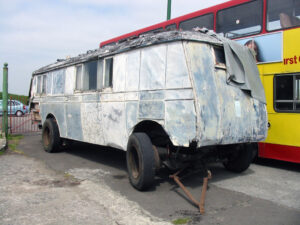
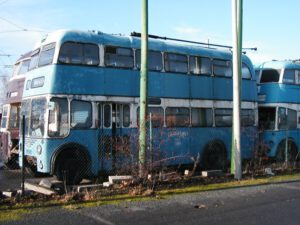
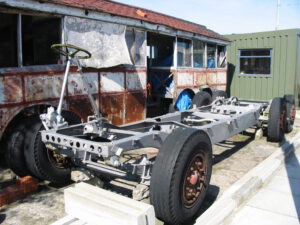
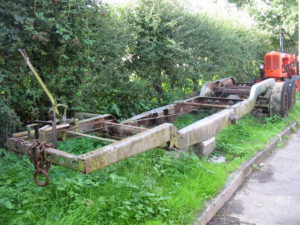
The extended period that no.589 has been kept outside has taken its toll on its condition and this has not been helped by vandalism in early March 2009 by vagrants in Durban. Basically complete mechanically and electrically, the bodywork is in need of extensive renovation.

A target of £150,000 has been set so that Johannesburg no.589 can be completely restored to operating condition and returned to passenger-carrying service at The Trolleybus Museum at Sandtoft. Donations to help reach this target will be gratefully received, will go into a dedicated “Johannesburg 589 Fund”: account and can be Gift Aided by UK tax payers to enable a further 28% in tax reclaim to go towards 589’s restoration appeal. Click Here for details of how to make a donation.
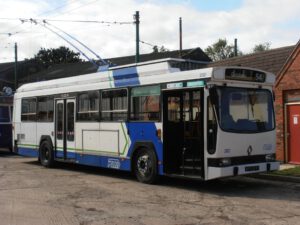
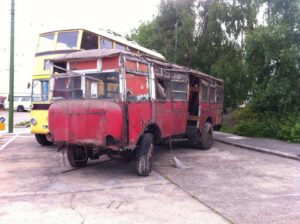
Johannesburg 589 fills a real gap in the UK’s overall collection of historic trolleybuses.

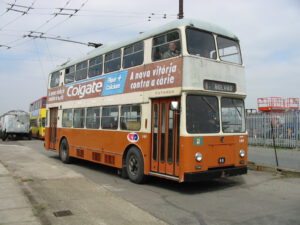
It is an example of a British “export” trolleybus and as such, represents many hundreds of such vehicles delivered both before and after the war. Being British “export” vehicles, they were examples of successful British engineering design and also illustrate the strong links that Britain had with its Empire.

No.589 itself comes from a batch of trolleybuses rich in other historical interest – for example:

  • They were virtually identical to the London SA3 class of trolleybuses, being a fulfilment of an order that was frustrated by World War 2.
  • Their “wartime connection” and their “London connection” add further dimensions to their interest.
  • They had MCCW-made bodywork that was actually assembled in Port Elizabeth, South Africa by Bus Bodies (South Africa) Ltd. Some of the batch remained in service for an extraordinary 30 years (1948-78).
  • Whilst most of the batch remained essentially unaltered all their life, some were rebuilt in later years for one-man operation.
  • Some of the batch (including 589) were used in the Johannesburg undertaking’s “non-European” fleet during South Africa’s infamous apartheid régime.

Johannesburg Trolleybus No. 589

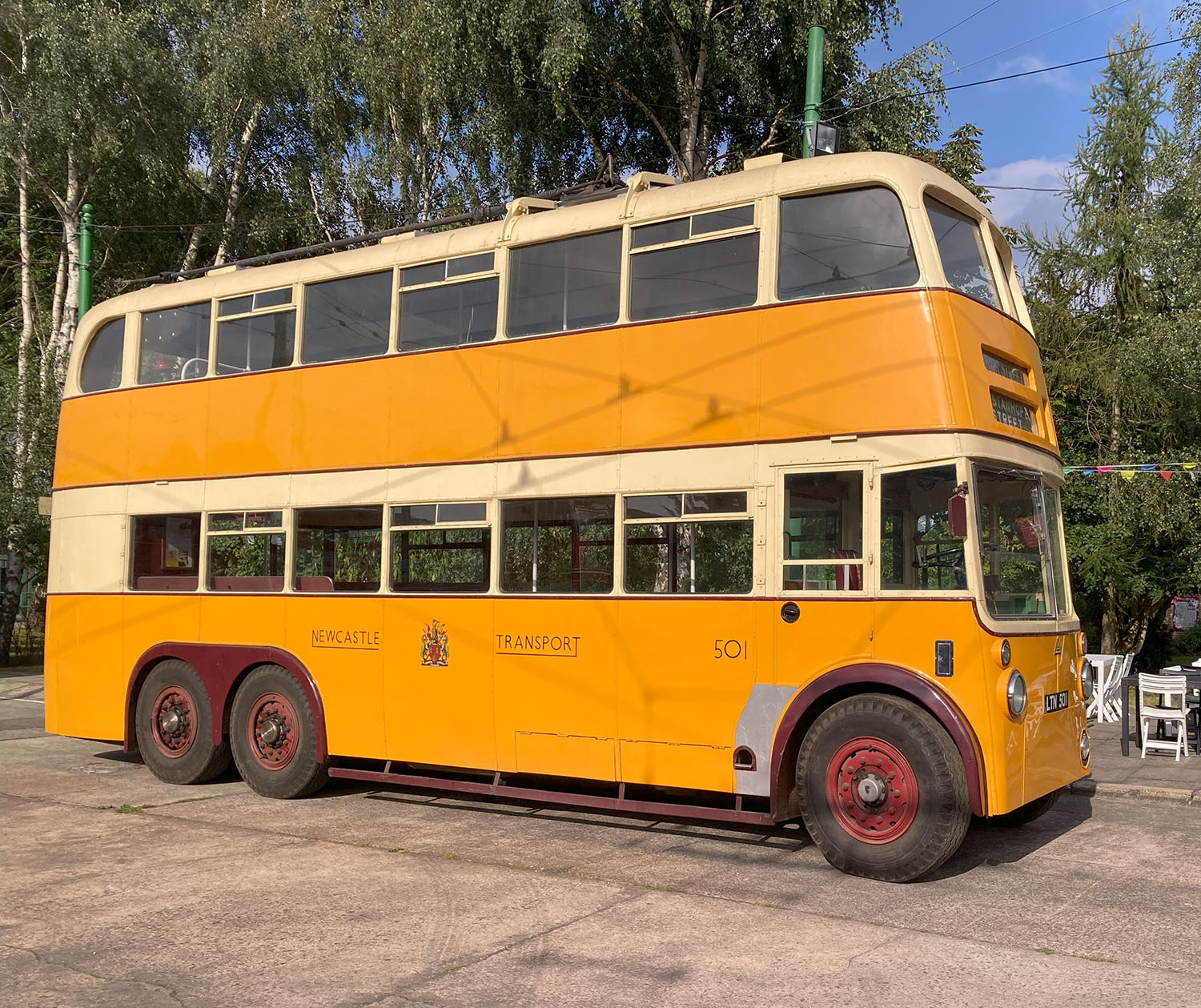
Chassis BUT 9641T (three axle), built to AEC design at Leyland's Ham (Surrey) factory)
Chassis Number 9641T026
Tyres 12.00 x 20.00 on all axles
Electrical Equipment English Electric SD (operating voltage: 550/600 volts DC)
Traction Motor English Electric EE410B (125hp)
Brakes Footbrake: Rheostatic, then air (Westinghouse equipment)
Handbrake: Mechanical to all four wheels
Bodywork MCCW Metal framed (6-bay) double deck, assembled by Bus Bodies (South Africa) Limited.
Body Layout H40/31D (rear staircase, air-operated front folding doors - exit only)
Dimensions Length (excluding bumper bars): 30ft
Width: 8ft
Height (over trolley gear): 15ft 8in
First Licensed* 7 June 1948
De-licensed 1 July 1974
* Trolleybuses in Johannesburg did not carry registration numbers; they were always referenced by their fleet numbers.

Back to top